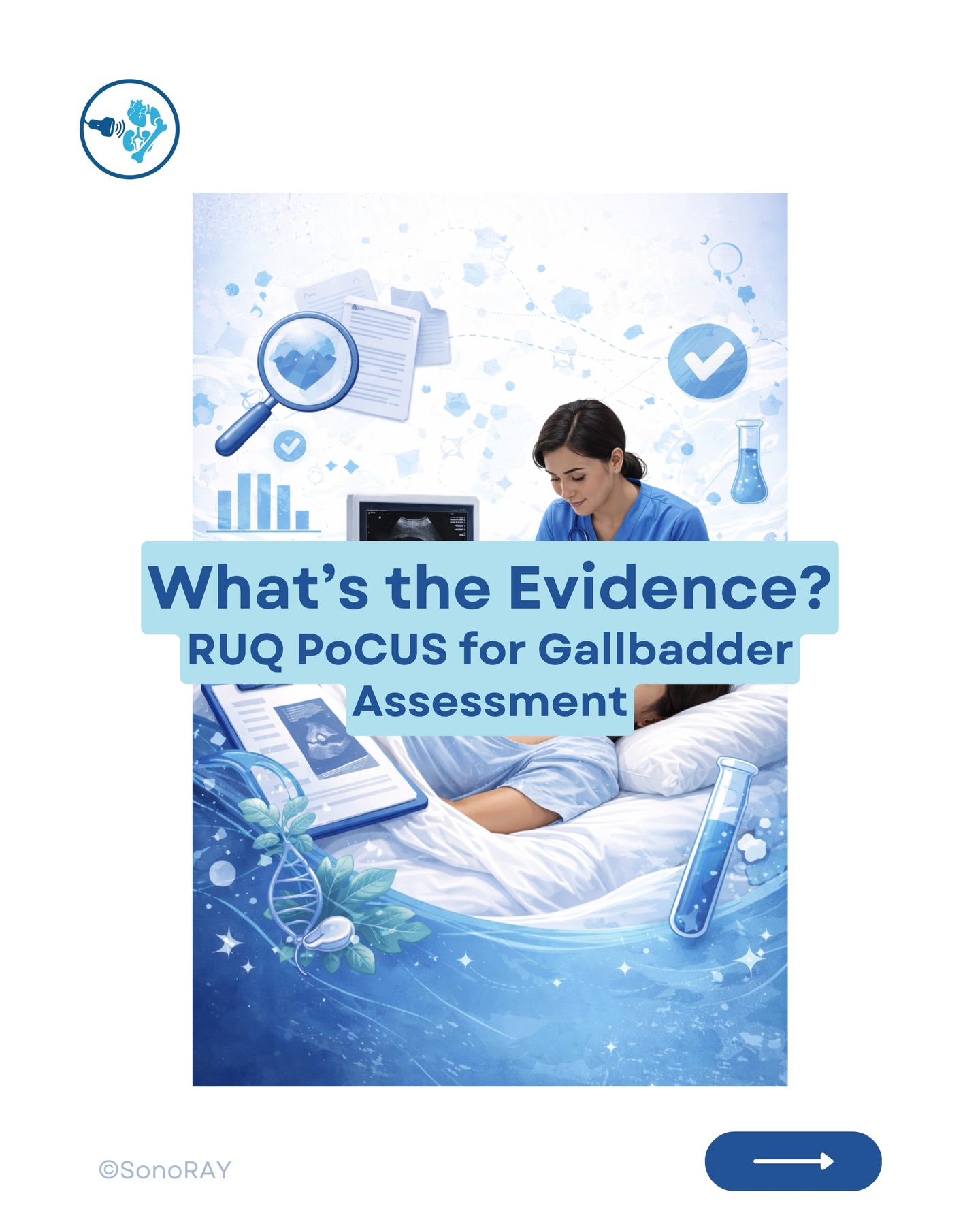
Gallbladder PoCUS: What does the evidence actually say?
Bedside PoCUS is a valuable first-line tool for evaluating right upper quadrant pain. It can reliably detect gallstones and help identify findings suggestive of acute cholecystitis, supporting faster clinical decisions.
Right upper quadrant pain is one of the most common ED and urgent care presentations. When time matters, bedside PoCUS can meaningfully change decision-making.
For gallstones (cholelithiasis):
Bedside PoCUS performs extremely well.
Meta-analytic data show ~94% sensitivity and ~93% specificity, making it a reliable first-line diagnostic tool at the bedside.
For acute cholecystitis:
PoCUS shines as a rule-in test.
While sensitivity is moderate, specificity is high, especially when multiple supportive signs are present:
• Sonographic Murphy sign
• Gallbladder wall thickening (>3 mm)
• Pericholecystic fluid
• Gallbladder distension ± hyperemia
Clinical takeaway:
PoCUS helps risk-stratify patients, prioritize formal imaging or surgical consults, and accelerate care when radiology is delayed—but should always be interpreted in clinical context.
About the Author
Written by SonoRAY Inc (@admin)