
Over 425+ participants across 10+ institutions trained to date•
rating on course quality and overall satisfaction
•100% would recommend the course to others.•Over 425+ participants across 10+ institutions trained to date•
rating on course quality and overall satisfaction
•100% would recommend the course to others.•Over 425+ participants across 10+ institutions trained to date•
rating on course quality and overall satisfaction
•100% would recommend the course to others.•Over 425+ participants across 10+ institutions trained to date•
rating on course quality and overall satisfaction
•100% would recommend the course to others.•Over 425+ participants across 10+ institutions trained to date•
rating on course quality and overall satisfaction
•100% would recommend the course to others.•Over 425+ participants across 10+ institutions trained to date•
rating on course quality and overall satisfaction
•100% would recommend the course to others.•Over 425+ participants across 10+ institutions trained to date•
rating on course quality and overall satisfaction
•100% would recommend the course to others.•Over 425+ participants across 10+ institutions trained to date•
rating on course quality and overall satisfaction
•100% would recommend the course to others.•Over 425+ participants across 10+ institutions trained to date•
rating on course quality and overall satisfaction
•100% would recommend the course to others.•Over 425+ participants across 10+ institutions trained to date•
rating on course quality and overall satisfaction
•100% would recommend the course to others.•
642493850_17889945369429062_4053416023720313119_n.jpg

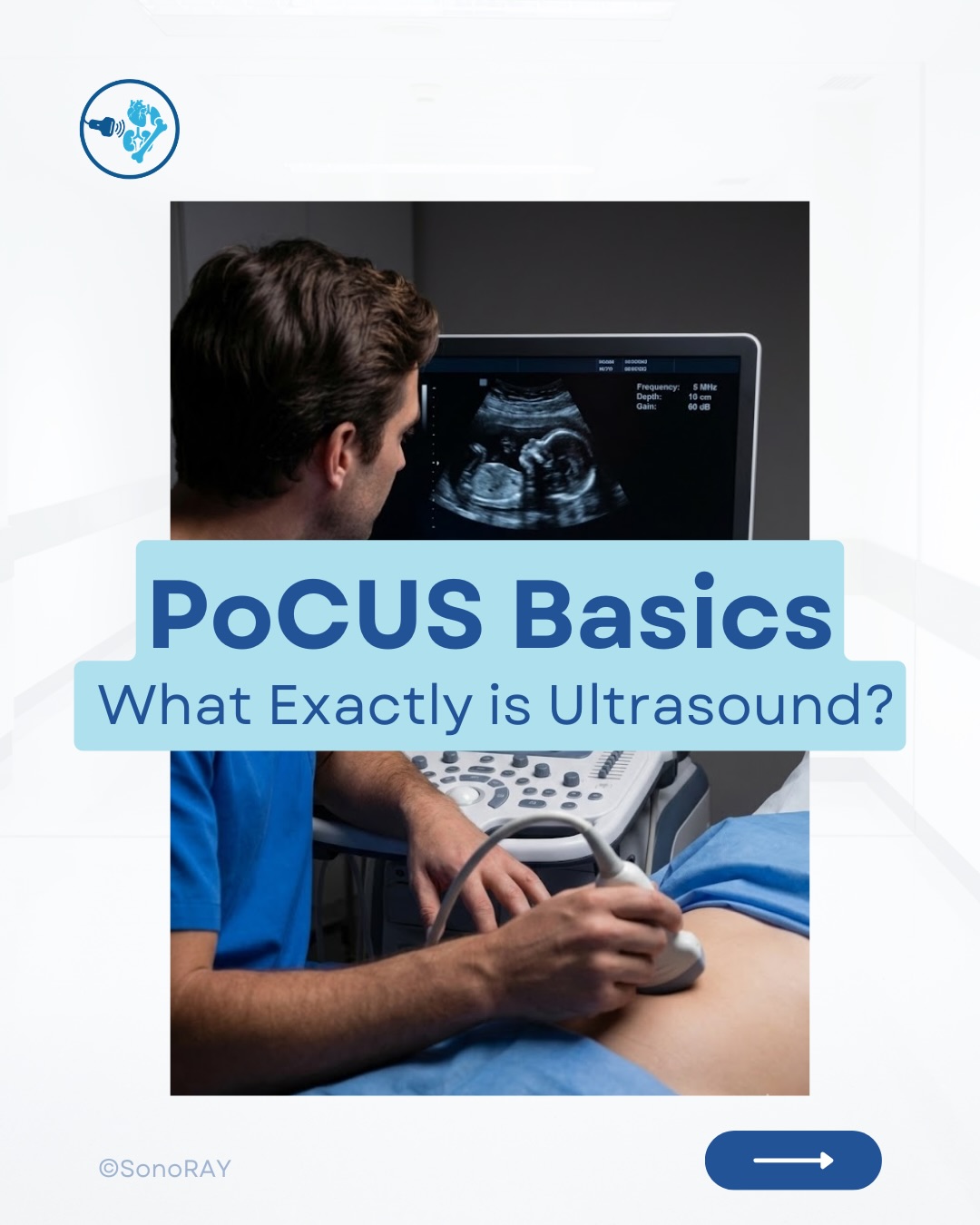
POCUS Basics: What Exactly Is Ultrasound?

SonoRAY Inc
March 4, 2026
52 views
•1 min read
POCUS UltrasoundEducation MedEd SonoRAY BedsideUltrasound

Ultrasound images are created by sound waves reflecting differently from tissues. Understanding these patterns helps clinicians interpret scans and apply PoCUS effectively at the bedside.

Ultrasound isn’t radiation.

It’s physics in action.


Sound waves are sent into the body → tissues reflect them differently → the machine translates echoes into images.


Fluid = anechoic (black)

Soft tissue = hypoechoic (gray)

Bone & air = hyperechoic (bright/shadowing)


Ultrasound doesn’t show “pictures” of anatomy the way a camera does.

It shows how sound behaves inside the body.


That’s why we can diagnose things like pneumothorax at the bedside — in real time.


Learn the physics.

Master the patterns.

Apply it clinically.

About the Author

Written by SonoRAY Inc (@admin)